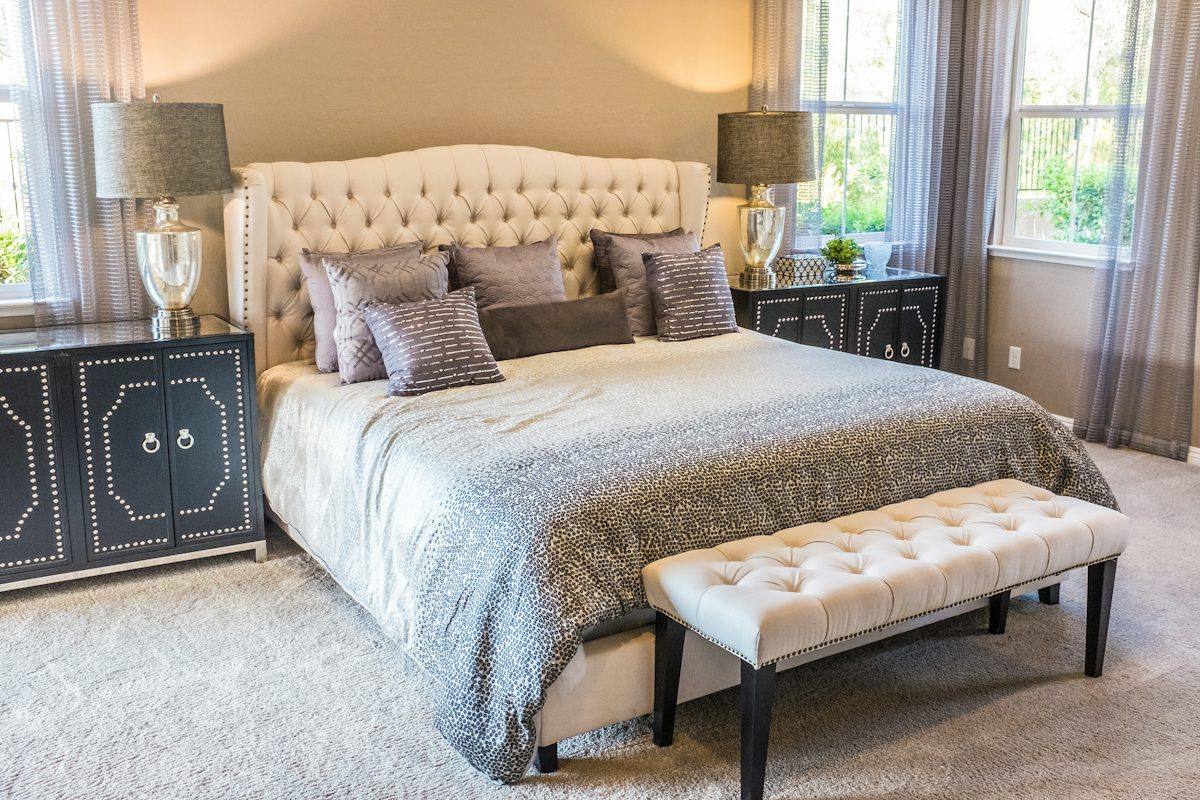
Not sure where to start?
Take a 30-second Finder — answer a few quick questions, get matched to the right type for how you sleep, then shop it in your budget.
Mattress Finder → Pillow Finder → Couples Fix →Sleeping with a partner?
Blanket theft, one of you roasting while the other freezes, every toss waking you both — the top couple sleep fights all have fixes that cost less than a new mattress. The Scandinavian two-duvet trick alone ends the blanket war for the price of a pizza night.
Fix your couple sleep →Shop by category
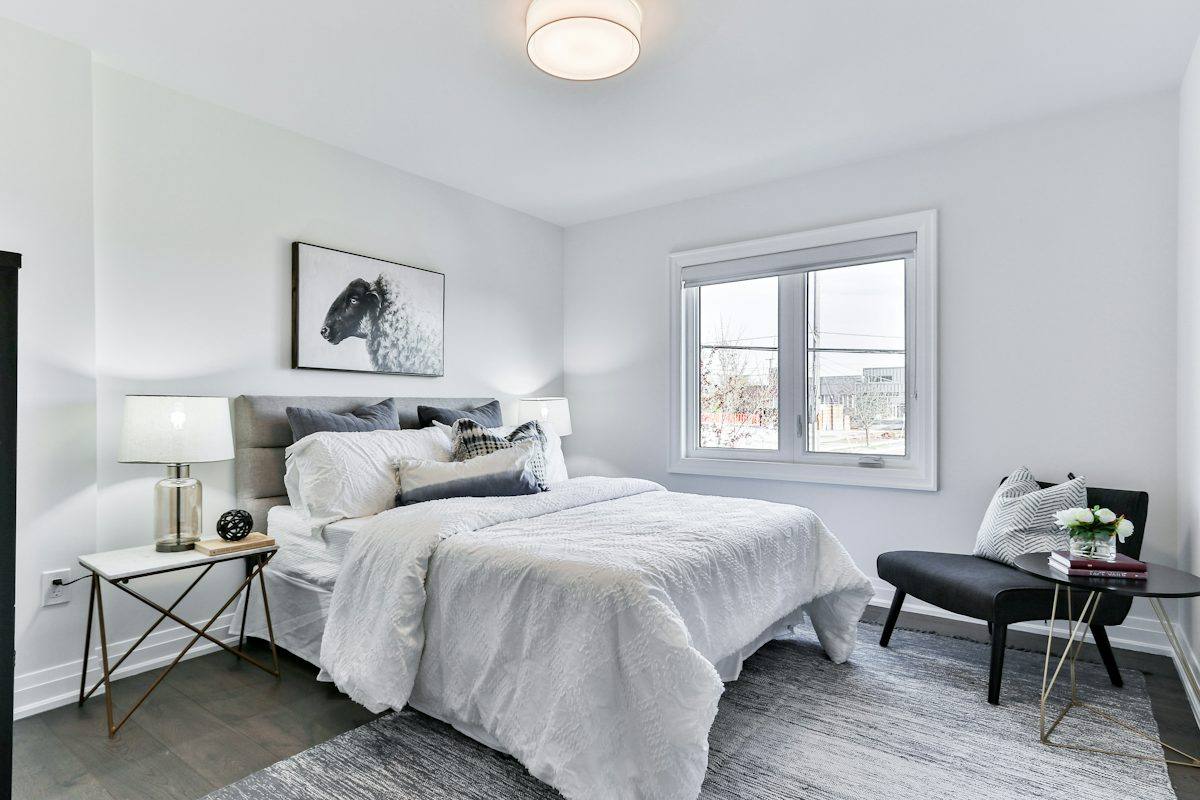
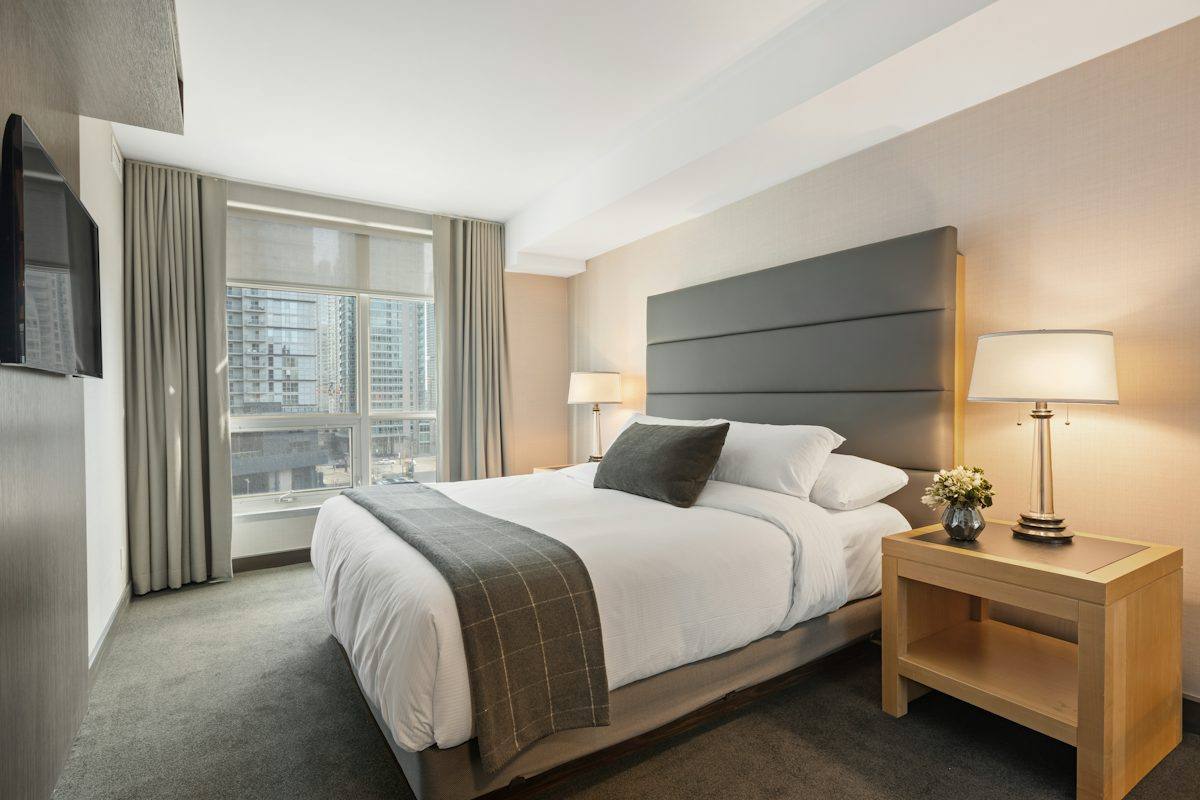
Sheets
Microfiber for budget softness, cotton and bamboo for breathability.
Best-seller set Cotton Bamboo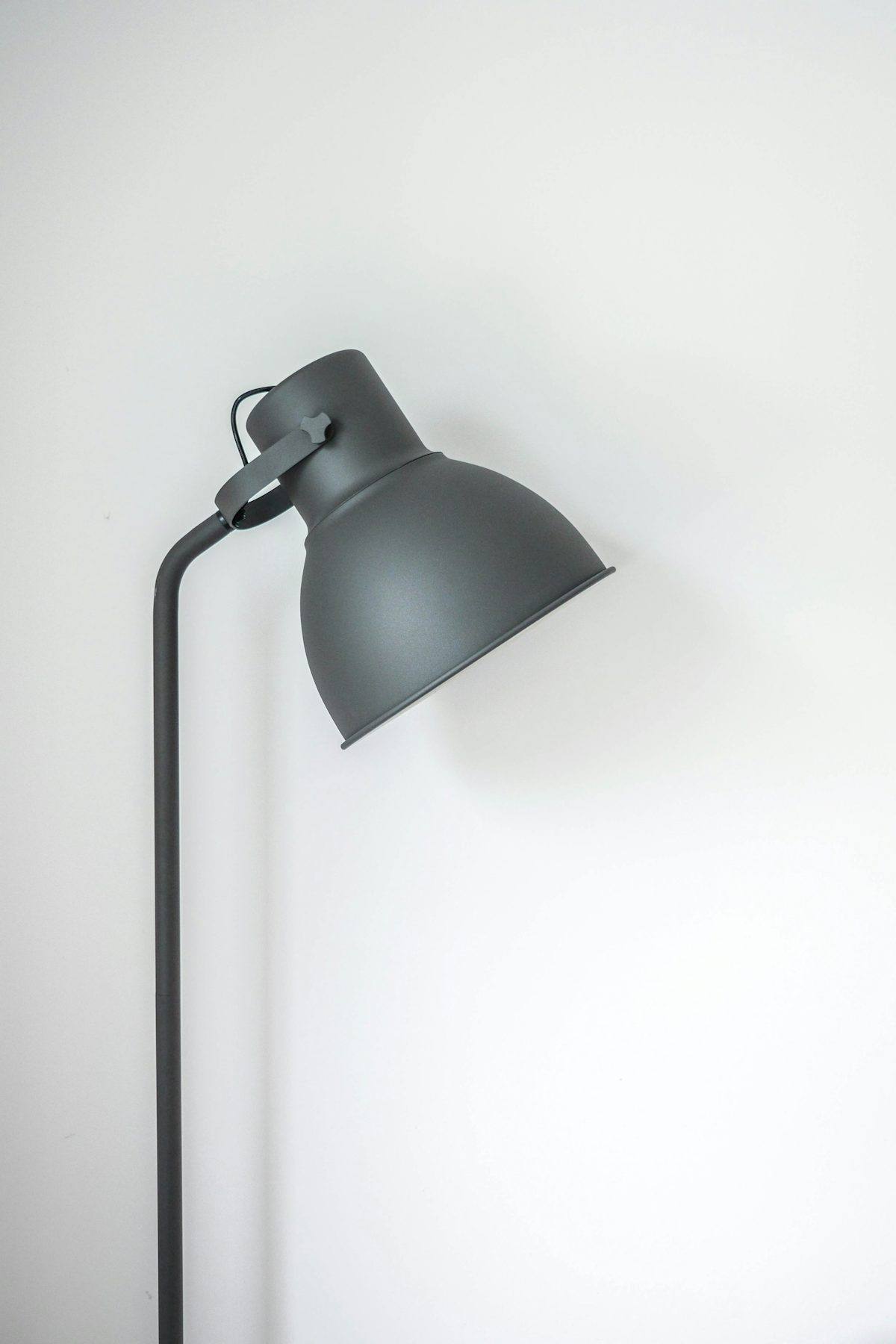
Ambient lighting
Warm, dim light at night helps your brain wind down. Harsh overhead light does the opposite.
Bedside lamps Sunrise alarms Smart bulbsThe 2-minute version
- Most people: medium-firm hybrid mattress, queen, $600–$1,200.
- Side sleepers: lean medium-soft. Stomach sleepers: lean firm.
- Buy during a holiday sale — Memorial Day, Labor Day, Black Friday — for 20–40% off.
- Always get a trial period (100 nights is standard) with free returns.
What the research actually says
Most mattress advice is marketing. Here's what peer-reviewed research and large surveys found — it's the reason this guide keeps saying "replace it when it's worn" and "use the trial":
- A new mattress measurably helps. In a 2006 Oklahoma State study published in the Journal of Chiropractic Medicine, 59 adults sleeping on beds at least 5 years old (average: nearly 10) switched to new medium-firm mattresses. They reported significant improvements in back pain (63%), shoulder pain (62%), back stiffness (58%), sleep quality (64%), and sleep comfort (70%) — and the gains kept growing each week of the study.
- Pain is the #1 reason people buy — and it usually works. A 2026 AARP survey of recent mattress buyers found 48% replaced their bed because the old one "was no longer comfortable." Of those who bought hoping to ease pain, 93% said the new mattress helped — "a lot" or "a little."
- Most people wait too long. The Better Sleep Council recommends evaluating your mattress for replacement every 5–7 years. One 2025 survey found 13% of American adults have never replaced their mattress.
"If your mattress is more than seven to 10 years old and has visible indentations where your torso rests, it may no longer keep your spine in alignment." — Dr. Shady Hassan, interventional pain and sports medicine physician (AARP, 2026)
Sources: Sleep Review summary of the Oklahoma State / Journal of Chiropractic Medicine study; AARP sleep survey (2026); Bear Mattress sleep habits study (2025).
Mattress types, honestly compared

| Type | Feels like | Best for | Watch out for |
|---|---|---|---|
| Hybrid (coils + foam) | Supportive with cushioning on top | Most sleepers, couples | Heavy; quality varies a lot by brand |
| All-foam (memory foam) | Contouring, "hug" feel | Side sleepers, pressure relief | Can sleep hot; cheaper ones sag faster |
| Innerspring | Bouncy, firm, traditional | Budget buyers, hot sleepers | Less pressure relief; motion transfer |
| Latex | Responsive, buoyant | Longevity, eco-conscious buyers | Expensive; heavy |
Mattress certifications, decoded
Certifications don't tell you whether a mattress will feel right — comfort is personal and that's what the trial is for. What they do tell you is whether the materials passed independent safety and emissions tests. Useful as a tiebreaker between two beds you already like:
| Certification | What it actually means | Common on |
|---|---|---|
| CertiPUR-US | Foam made without ozone depleters, heavy metals, or formaldehyde, and tested for low VOC emissions | Memory foam and hybrid mattresses |
| GREENGUARD / GREENGUARD Gold | Tested for low chemical emissions; Gold is the stricter version (safe for schools and healthcare) | Higher-end foam and latex beds |
| GOTS / GOLS | Certified organic textiles (cotton, wool) and certified organic latex | Organic latex mattresses |
| OEKO-TEX Standard 100 | Every textile component tested for harmful substances | Mattress covers and ticking |
One honest caveat: a badge is a materials signal, not a quality guarantee. A CertiPUR-US foam in a saggy, cheaply-built mattress is still a saggy mattress — the build and the trial period matter more.
What to actually pay
Typical queen street prices from reputable sellers — the same bands our Finders shop in:
- Budget (under $400): fine for guest rooms, kids, or short-term use.
- Value ($400–$800): the best value zone — solid daily-driver mattresses live here.
- Premium ($800–$1,200): better materials, thicker comfort layers, longer warranties.
- Top of the line ($1,200+): worth it for latex or high-end hybrids if you'll keep it 10 years.
Ignore "original" prices — almost everything is perpetually on sale. Compare the sale price across sellers.
Shop hybrid mattresses Shop memory foamWhen to buy: the deal calendar
Mattress prices move in a predictable cycle. If you can wait a few weeks, do:
- Presidents' Day (Feb): first big sale wave of the year, often 20–30% off.
- Memorial Day (May): one of the year's best — new models arrive, old ones get cleared.
- Labor Day (Sep): another strong weekend, similar to Memorial Day.
- Black Friday / Cyber Monday (Nov): typically the deepest discounts of the year.
The honest version: most "40% off" claims are off inflated list prices nobody pays. Track the actual sale price across a couple of sellers, and value a generous trial/return policy over an extra 5% off.
Firmness cheat sheet
| Sleep position | Start with |
|---|---|
| Side | Medium-soft to medium (lets shoulders/hips sink) |
| Back | Medium-firm |
| Stomach | Firm (keeps hips from sinking) |
| Combination | Medium-firm |
Over about 230 lbs, go one step firmer than the chart — softer beds bottom out under more weight.
What size do you actually need?
| Size | Dimensions | Good for |
|---|---|---|
| Twin | 38″ × 75″ | Kids, bunk beds, small guest rooms |
| Twin XL | 38″ × 80″ | Taller kids and teens, dorms |
| Full / Double | 54″ × 75″ | Single sleepers who want room; tight master bedrooms |
| Queen | 60″ × 80″ | Couples in average bedrooms — the most popular size by far |
| King | 76″ × 80″ | Couples who want real space, plus kids and pets who migrate in |
| Cal King | 72″ × 84″ | Tall sleepers — trades 4″ of width for 4″ of length |
Measure your room first: leave at least 2 feet of clearance on three sides of the bed. A queen works in roughly a 10′ × 10′ room; a king wants 12′ × 12′. And check your doorway and stairs — a king won't bend around a tight landing.
Top sellers worth a look
Consistent best-sellers in sleep gear — not sponsored picks, just what's genuinely popular. Two quick rules before you buy accessories:
- Mattress topper: only buy one if your mattress is too firm but otherwise in good shape. A topper can't fix a sagging mattress — that's a replacement job.
- Sheets: brushed microfiber (like the pick below) is the budget king for softness; if you sleep hot, cotton or bamboo breathes better.
| Product | Why people buy it | |
|---|---|---|
| Linenspa 2" Gel Memory Foam Topper | Best value fix for a too-firm bed — real pressure relief under $100. Honest caveats: the "cooling gel" effect is modest, expect softening after ~18–24 months. | Check price |
| Mellanni Bed Sheet Set | Perennial Amazon best-seller — soft brushed microfiber around $35–40 with a lifetime guarantee. Great budget pick; hot sleepers may prefer cotton. | Check price |
| Beckham Hotel Collection Bed Pillows (set of 2) | Down-alternative, hotel-plush feel at a budget price. Huge review count. | Check price |
| UGG Plush Flannel Throw Blanket | Oversized, reversible fleece — the cozy-layer upgrade for any bed. | Check price |
| Intex Dura-Beam Deluxe Air Mattress | Built-in pump, 18" height, the go-to guest bed when the couch won't cut it. | Check price |
Common questions
What is the best type of mattress for most people?
A medium-firm hybrid (pocketed coils plus foam comfort layers) suits the widest range of sleepers. Side sleepers often prefer medium-soft; stomach sleepers and heavier sleepers usually do better with firm.
How much should I pay for a good queen mattress?
Most good queens land between $400 and $1,200: budget picks under $400, the best value at $400-$800, premium quality at $800-$1,200, and top of the line above that. Prices swing heavily around holidays like Memorial Day, Labor Day, and Black Friday.
How long should a mattress last?
Most mattresses last 7-10 years. All-foam beds tend toward the shorter end, hybrids and latex toward the longer end. Replace it when you wake up sore or it visibly sags.
What does a mattress trial period mean?
Most online mattress sellers offer a trial, commonly 100 nights, with free returns if you don't like it. Always check who pays return shipping and whether there's a minimum break-in period, often 30 nights.
Is buying a mattress wholesale actually cheaper?
True wholesale pricing is for retailers buying in volume. For individual shoppers, the closest equivalent is buying during major sales, buying online direct-to-consumer brands, or checking warehouse clubs - discounts of 20-40% off list price are common.
Do I need a box spring?
Usually no. Most modern mattresses work on a platform bed or a slatted base with slats under 3 inches apart. Check the warranty terms - using the wrong base can void it.
Is the fiberglass in budget mattresses dangerous?
Fiberglass itself is not toxic, but many budget memory-foam mattresses use a fiberglass fire-barrier sock just under the outer cover. It is safe as long as you never unzip or remove the inner cover — the loose fibers are the irritant, so the one rule is to keep the cover zipped. If it still worries you, look for mattresses that list a fiberglass-free fire barrier such as silica-based rayon.
Why do cooling mattresses still sleep hot?
Most cooling features only handle surface heat for the first part of the night: gel infusions and phase-change covers absorb heat, then saturate. Dense memory foam underneath still insulates. If you sleep genuinely hot, airflow matters more than a cooling label — pocketed coils or latex breathe better than all-foam, and a breathable cover, cotton or linen bedding, and a cool room do more than any gel layer.
Why do sagging warranty claims get denied?
Most warranties only cover a visible impression deeper than about 1 to 1.5 inches, measured with no weight on the bed — and gradual softening doesn't count, even if the bed feels worse. Using the wrong base, such as widely spaced slats or an old sagging box spring, can also void the claim. Before you file, measure the dip with a straight edge across the surface, photograph it, and check your warranty's depth threshold and base requirements.
Is a mattress-in-a-box as good as one from a store?
Usually, yes — many boxed and store mattresses come from the same factories and use the same kinds of foam and coils. Compression for shipping doesn't damage a well-made mattress; give it 24–72 hours to fully expand. The new-foam smell (off-gassing) is normal and fades within a few days if you ventilate the room. What matters more than where you buy it is the trial period: a 100-night trial at home beats a 10-minute lie-down in a showroom, since your body needs weeks to adjust to a new bed.
Should I wait for Black Friday to buy a mattress?
If you can wait, Black Friday is one of the best times to buy — alongside Memorial Day and Labor Day — with real discounts of 20–40% off list price common on major brands. But don't wait if your current mattress is sagging or waking you up sore; a month of bad sleep isn't worth the savings. And judge the deal by the final price, not the claimed discount: some list prices are inflated before the sale, so compare against the price the same model sold for in ordinary weeks.
What do I do with my old mattress?
Sort it out before delivery day, not after. Ask the seller about haul-away when you order: many furniture stores remove the old mattress with delivery, sometimes free and sometimes for a fee, while mattress-in-a-box deliveries usually don't include it. If the old bed is clean and usable, charities and thrift stores often pick it up for free — don't donate one with stains, tears, or bed bugs. Otherwise check your city's bulk pickup or mattress recycling program; rules and fees vary by area, and dumping one curbside can draw a fine.
What should heavier sleepers look for in a mattress?
Go thicker and firmer than average: at least 12 inches tall, a firm or medium-firm feel, and a hybrid build with sturdy pocketed coils rather than a thin all-foam bed, which is more likely to bottom out and sag early. Check the specs for high-density foam (around 1.8 lb per cubic foot or higher for polyfoam) and a stated weight capacity that covers you with room to spare. A soft, thin mattress may feel fine for a few weeks and then sink where you sleep.
What mattress is best for back pain?
There is no single best mattress for back pain — the goal is a bed that keeps your spine neutral, not one that is simply hard. For most people with back pain, a medium-firm hybrid works well: it supports the lower back instead of letting it sag, while still cushioning the shoulders and hips. Very soft beds often make back pain worse by letting the hips sink, and very firm beds can leave gaps under the lower back for side sleepers. If your pain is new, severe, or comes with numbness, see a clinician first — a mattress change treats the symptom, not the cause. Give any new bed the full trial period before judging it, since your back needs weeks to adjust.
What mattress is best for side sleepers?
Side sleepers usually do best on a medium-soft to medium mattress with enough give at the shoulders and hips to keep the spine straight. Look for a thicker comfort layer — around 3 inches or more of foam or latex over a supportive core — and be wary of firm beds, which tend to leave pressure on the shoulder and hip and push the spine out of line. A pillow tall enough to fill the gap between shoulder and head matters just as much as the mattress itself.
What mattress is best for stomach sleepers?
Stomach sleepers usually do best on a firm or medium-firm mattress with a thin comfort layer. The risk with a soft bed is the hips sinking, which arches the lower back all night and often means waking up sore. Look for a supportive hybrid or latex bed rather than deep memory foam, and pair it with a thin, flat pillow — or none at all — so the neck stays closer to neutral. If you also roll onto your side during the night, a medium-firm bed is the better compromise than a very firm one.
What do mattress firmness ratings mean?
Most brands rate firmness on a 1–10 scale: soft is roughly 3–4, medium about 5–6, medium-firm 6–7, and firm 7–8 or above. The catch is that the scale isn't standardized — one brand's medium-firm can feel like another's firm. Body weight shifts the feel too: heavier sleepers sink deeper and usually perceive the same bed as softer, while lighter sleepers feel it as firmer. Use the rating only to compare models within one brand, and lean on the trial period to judge the real feel.
How thick should a mattress be?
For most adults, 10–12 inches is the sweet spot: enough comfort layers over a solid support core. Under 8 inches usually means thin comfort layers and a bed more likely to bottom out — fine for kids or an occasional guest room, less so for nightly use. Above 14 inches is mostly extra padding and a taller profile (harder to climb into, needs deep-pocket sheets), not automatically better support. Thickness alone doesn't tell you much — what matters is what's inside — but as a rough rule, heavier sleepers should lean toward 12 inches or more with a coil core.
What size mattress should I get?
Start with the room, then the sleepers. Twin (38 × 75 in) suits one child or a small guest room; twin XL (38 × 80) fits taller single sleepers. Full (54 × 75) works for one adult who wants room to spread out, but it's tight for two. Queen (60 × 80) is the default for most couples and most bedrooms. King (76 × 80) is worth it if two people sleep hot, sprawl, or share the bed with kids or pets — but only if the room still leaves about 2 feet of walking space on each side. California king (72 × 84) trades width for length, so it suits taller sleepers over wider ones.
What's the difference between memory foam, latex, and hybrid mattresses?
Memory foam contours closely and isolates motion well, but it sleeps warmest and can feel like sinking in. Latex is springier and cooler, responds faster when you move, and usually lasts longer — but it costs more and feels bouncier, which some people dislike. A hybrid pairs pocketed coils with foam or latex on top, so you get airflow and support from the coils with the pressure relief of foam; it's the most versatile choice and the one most people end up happy with. There's no best material, only the best match for how you sleep: hot sleepers and combination sleepers usually prefer latex or a hybrid, while side sleepers who like a hugging feel often prefer memory foam.
What mattress is best for couples who disagree on firmness?
Start with a medium-firm hybrid — it's the compromise most couples land on, since it supports a back or stomach sleeper while still cushioning a side sleeper. If one of you is much heavier than the other, a split king (two twin XLs side by side) lets each side pick its own firmness, and some brands sell dual-firmness beds with a different feel on each half. A cheaper fix is a soft topper on one side only — it changes the feel without buying a new bed. Whatever you pick, good motion isolation matters as much as firmness: pocketed coils or memory foam keep one person's tossing from waking the other.
Should I flip or rotate my mattress?
Rotate it, don't flip it. Most modern mattresses are one-sided — the comfort layers are on top and the support core is on the bottom — so flipping one puts the hard base on top and can damage the bed. Rotating head-to-foot every 3–6 months evens out wear and helps prevent a dip forming where you sleep. Older two-sided innerspring mattresses are the exception: those can be flipped as well as rotated. Check your warranty — some brands require regular rotation to keep the warranty valid.
Do I need a mattress protector?
Yes — it's the cheapest insurance for a mattress. A protector guards against spills, sweat, and dust mites, and most warranties are voided by stains, so a $30–60 protector can protect a 10-year warranty. Buy waterproof, not just water-resistant: water-resistant slows a spill down, waterproof stops it. Pick a thin one — thick padded protectors change how the bed feels — and look for a quiet, breathable fabric so it doesn't sleep hot or crinkle. Wash it every month or two, like a sheet.
Is a mattress topper worth it?
Often, yes — if the problem is firmness, not support. A 2–3 inch topper can soften a bed that feels too hard for around $50–150, and it's a good stopgap while you decide on a new mattress. But a topper can't fix a sagging mattress or a bed that has lost its support: if the mattress dips or you wake up sore, the topper just follows the dip. Memory foam toppers sleep warmest and hug the body; latex toppers are cooler and springier. And if you're buying a new mattress anyway, skip the topper — put the money toward the right firmness instead.
Is an adjustable base worth it?
It depends on how you use your bed. An adjustable base lets you raise the head or feet, which can help with snoring, acid reflux, and reading or watching TV in bed — and it makes getting in and out easier for some people. Most cost $300–1,000 or more, so it's a real expense on top of the mattress. Most foam and hybrid mattresses work fine on one; some traditional innersprings don't bend, so check compatibility first. Features worth paying for are quiet motors, a wall-hugger design that keeps you near the nightstand when raised, and zero-clearance legs if the base sits inside a bed frame. Skip it if you only sleep flat — the money is better spent on the mattress itself.
Affiliate disclosure: Some links on this page are affiliate links. If you buy through them, we may earn a commission at no extra cost to you. It keeps the lights on and the advice honest.